Most Asian currencies steadied on Wednesday after posting strong gains overnight, while the U.S. dollar weakened as risk sentiment improved following signs of a potential de-escalation in the Middle East conflict.
The US Dollar Index edged 0.1% lower in Asian trading after settling 0.6% lower overnight.
US Dollar Index Futures also traded down 0.1% as of 23:52 ET (03:52 GMT).
Get real-time currency market updates with InvestingPro subscription
Trump says Iran war could end soon; Hormuz risks remain Investors reacted to comments from U.S. President Donald Trump that Washington could end its military campaign against Iran within “two to three weeks,” raising hopes of a near-term resolution.
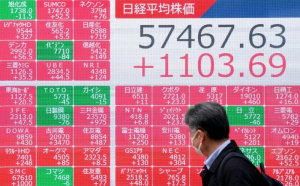
The improved sentiment stoked a rally in risk assets, with Asian stock markets surging on Wednesday.
However, investors were cautious as a Wall Street Journal report said that Trump was willing to end the U.S. military campaign even if the Strait of Hormuz remains largely closed, underscoring persistent risks to global trade and energy supply.
Prospects for a durable peace deal between the United States and Iran remain uncertain despite recent diplomatic signals, analysts at MUFG said.
They noted key sticking points, including Iran’s internal power structure, the strategic leverage of the Strait of Hormuz, and broader regional tensions, warning that even a U.S. withdrawal could leave an “extremely unstable equilibrium.”
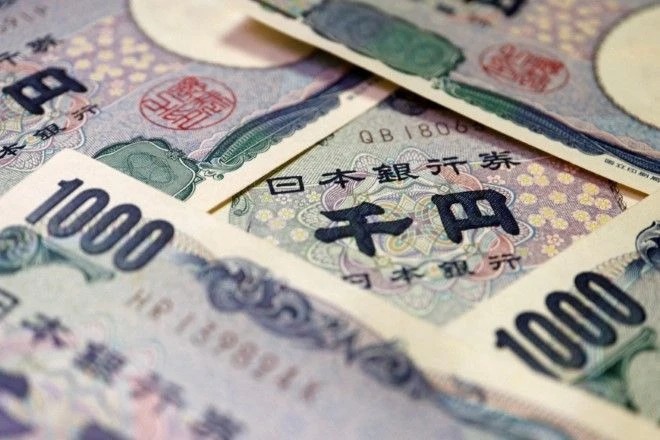
The Japanese yen's USD/JPY pair was largely muted after slipping 0.6% in the previous session.
The South Korean won's USDKRW pair edged up 0.2% on Wednesday, after falling 0.7% overnight.
The Indian rupee's USD/INR pair rose 0.2% to 93.68 rupees, after dropping 1% on Tuesday. The currency hit a record low of 95.22 rupees in the previous session.
China factory activity expands, but input costs surge Economic data from China also underscored underlying pressures in the region.
The RatingDog Manufacturing PMI showed factory activity expanded for a fourth straight month in March, but growth slowed and missed expectations, highlighting a moderation in momentum.
The survey pointed to sharply rising input costs, driven in part by elevated oil prices linked to the Middle East conflict, with manufacturers facing the fastest increase in input prices since March 2022.
The Chinese yuan's onshore pair USD/CNY pair was largely muted while the offshore pair USD/CNH ticked down 0.2%.
Elsewhere, the Singapore dollar's USD/SGD pair traded flat.
The Australian dollar's AUD/USD rose 0.2% on Wednesday.
Investors are now looking ahead to upcoming U.S. economic data, including the nonfarm payrolls report later this week, for further direction on monetary policy and currency markets.