U.S. stock index futures fell in Asian trading on Tuesday, as investors cautiously watched President Donald Trump’s deadline for Iran to reopen the Strait of Hormuz after Tehran rejected a ceasefire proposal.
S&P 500 Futures fell 0.5% to 6,621.50 points, while Nasdaq 100 Futures declined 0.6% to 24,225.00 points by 00:38 ET (00:15 GMT). Dow Jones Futures ticked down 0.3% to 46,771.0 points.
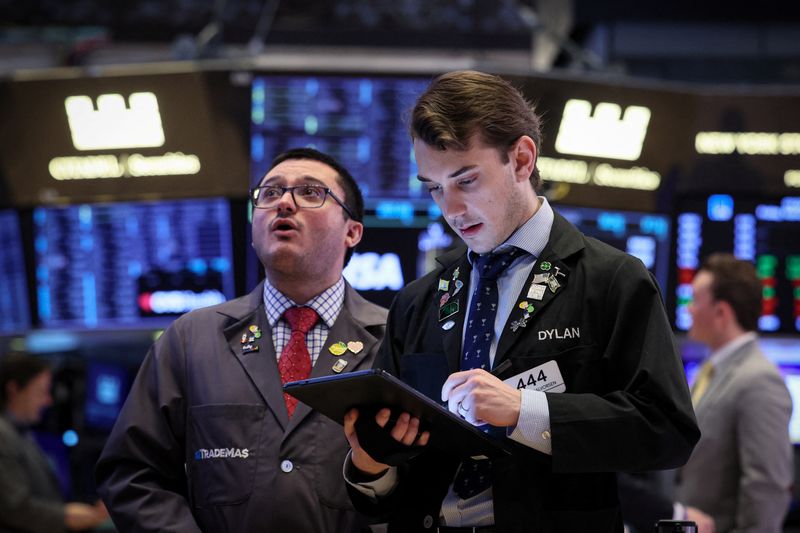
Wall Street closed higher on Monday, with the Dow Jones Industrial Average rising 0.4%, the S&P 500 gaining 0.5%, and the NASDAQ Composite advancing 0.5%.
Get premium Wall Street insights with analyst comments on InvestingPro
Iran rejects ceasefire proposal; Trump deadline nears Investor focus remained squarely on rapidly evolving developments in the Middle East, where diplomatic efforts to halt hostilities appeared to be faltering.
Iran rejected a U.S.-backed proposal, developed with regional mediators including Pakistan, Egypt, and Turkey, that called for a 45-day ceasefire and the reopening of the Strait of Hormuz.
Iran insisted on a permanent end to the conflict, including binding guarantees against future attacks, lifting of sanctions, compensation for war damages, and a broader regional settlement.
Trump, meanwhile, escalated rhetoric ahead of the deadline, warning that failure to comply by 8 p.m. ET on Tuesday could trigger extensive U.S. strikes on Iranian infrastructure, including power plants and bridges.
He said on Monday, "The entire country can be taken out in one night, and that night might be tomorrow night."
The Strait of Hormuz, which typically handles roughly one-fifth of global oil flows, has remained disrupted amid the conflict, pushing crude prices sharply higher and adding to inflation concerns.
ISM services index came in a touch softer than expected Data on Monday showed the U.S. services sector lost some momentum in March.
The Institute for Supply Management said its non-manufacturing PMI fell to 54.0 from 56.1 in February, missing expectations of 54.8, though it remained above the 50 level that separates expansion from contraction.
The report pointed to a mixed macro backdrop, with business activity slowing and employment weakening, even as demand indicators such as new orders stayed relatively firm.
More notably, the prices paid index surged sharply, marking the biggest increase in over 13 years, underscoring intensifying inflation pressures linked to higher energy costs and supply disruptions.